

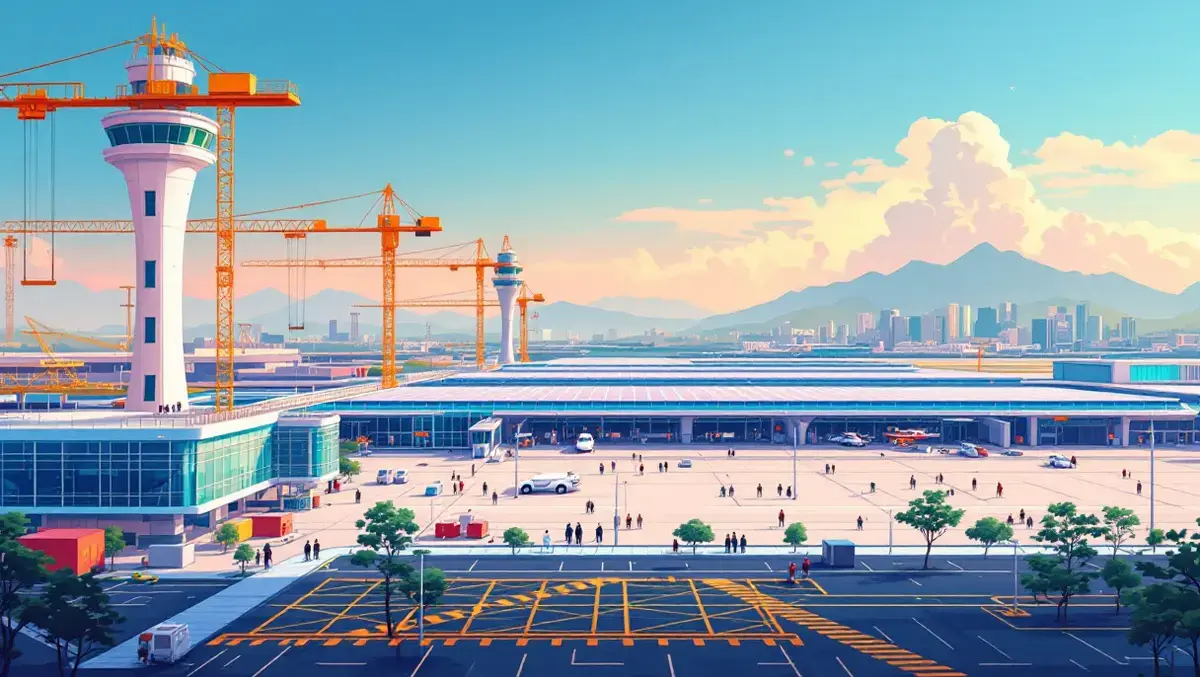
Asia airports brace for USD $2.4 trillion investment push
Fri, 2nd Oct 2026 (Today)
Passenger Terminal Expo Asia 2026 highlighted the scale of airport investment planned across Asia and the design questions facing operators. An event report said the region must expand capacity while adapting to changing technology and sustainability demands.
Discussions in Singapore focused on how airports can build long-life infrastructure when passenger processing, baggage handling and terminal use may shift significantly over time. Drawing on 93 sessions, the report examined funding, operational planning and the commercial effects of redesigning passenger journeys.
Forecasts presented at the event showed the scale of the challenge. ACI Asia-Pacific & Middle East estimates that airports worldwide will require USD $2.4 trillion in capital investment by 2040, including USD $1.3 trillion in the Asia-Pacific region.
That demand is already reflected in major national programmes. Airports of Thailand outlined an USD $11 billion plan to increase annual capacity from 116 million to 205 million passengers over the next decade, including a proposed South Terminal at Suvarnabhumi that would add capacity for another 50 million passengers.
Elsewhere, the report identified demand for 100 new airports in India and 39 in Indonesia. In Indonesia, the need is tied to improving connectivity across an archipelago of about 17,000 islands.
Design choices
Speakers said early design decisions have long-term consequences for cost and flexibility. The report highlighted phased capacity planning, prefabrication and clear governance as ways to reduce uncertainty in large construction programmes.
Operational readiness was also a recurring theme. Participants said airlines and frontline teams need to be involved early and stressed the value of rehearsing full airport operations before a new facility opens.
Artificial intelligence was another major topic. Rather than focusing only on automation, discussions explored whether AI could remove or reshape some of the airport processes around which terminals have traditionally been designed.
If check-in becomes less important, or baggage moves through separate systems, airports may need less space for counters, queues and reclaim halls. That could change how terminals divide space between processing areas and commercial uses.
A case study from Kansai illustrated the commercial impact of operational changes. Passenger throughput increased from 4,500 to 6,000 passengers per hour, while duty-free and food and beverage spending rose by 30% within three months.
Even so, delegates said AI projects depend on reliable operational data, secure information sharing and staff expertise. They also stressed that airports must continue to serve both passengers who prefer self-service and those who need visible in-person support.
Sustainability funding
Sustainability was discussed less as a branding issue than as a budgeting question. Delegates examined whether environmental measures can generate enough financial return to compete with other investment priorities.
The report included examples where lower carbon output was linked to lower cost. At San Diego Terminal 1, a structural engineering change reduced steel requirements by 4,000 tonnes, cut embodied carbon by 30% and saved USD $53 million.
Commercial planning featured heavily in those discussions. Non-aeronautical activities account for 43.5% of airport income in Asia-Pacific and the Middle East, underlining the importance of terminal layouts that support spending as well as passenger movement.
Changi's Jewel was cited as an example of an airport asset attracting visitors beyond airline customers. It has drawn 83 million visitors, about 60% of them local, according to the report.
Dominic Pinfold, Organiser of PTE Asia, said the event was intended to focus on practical responses to those pressures. "Airport growth is creating an extraordinary opportunity, but it also raises practical questions about capacity, security, sustainability and how every part of the passenger journey works together," he said.
"Our first PTE Asia gave the industry a place to compare real solutions, learn from projects across different markets and build the partnerships needed for the next phase of airport development," Pinfold said.