

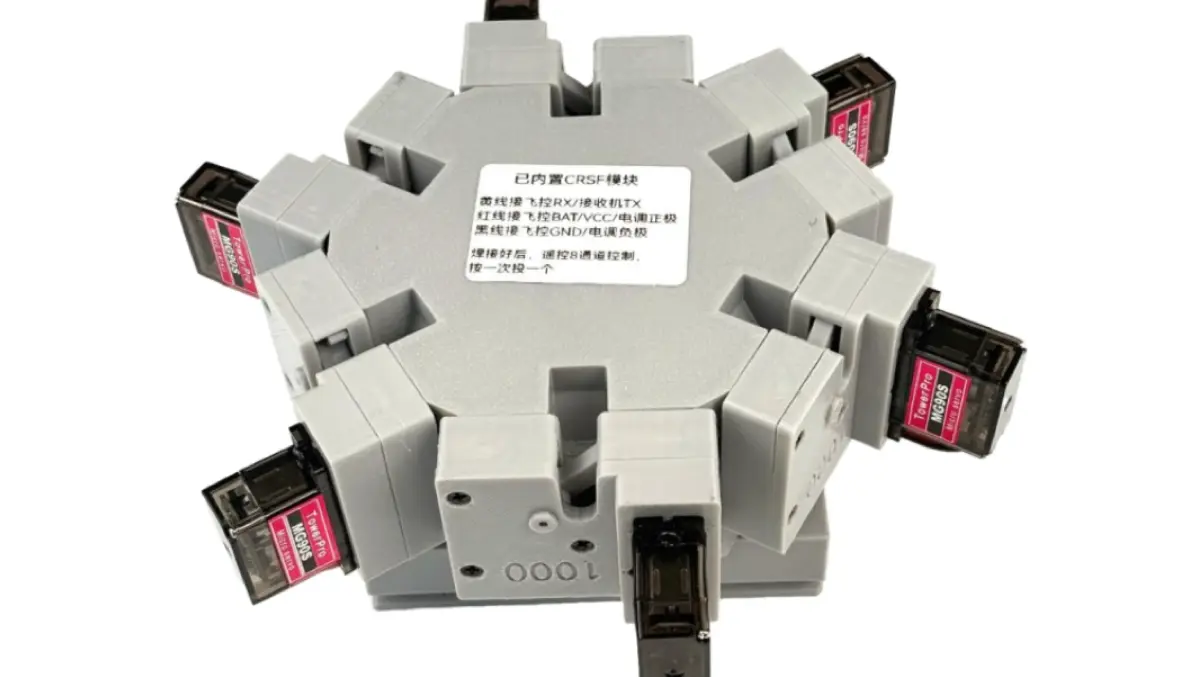

AeroValo has outlined a potential role for drone payload-release equipment in delivering emergency supplies. It said the concept would require further testing and regulatory review before any operational use.
The proposal centres on hardware that could enable a compatible unmanned aircraft to carry and release small items when roads are blocked or access is difficult. AeroValo stressed that it is not announcing a rescue deployment, a certified emergency service or an operational partnership.
Photographs of a multi-channel drone payload-release device were used to illustrate the type of equipment that might be assessed for such work. AeroValo said the images show the physical hardware only and do not indicate field deployment or certification.
Emergency logistics was the main context for the announcement. Any drone system for supply delivery would need to address payload limits, weight distribution, attachment security, power consumption, flight time, weather, navigation, communications and the safe separation of a payload from the aircraft.
Packaging would also be central if supplies were to be moved by air. Items would need protection against vibration, movement, temperature changes, moisture and possible impact during handling or delivery.
Possible payloads identified by AeroValo included compact first-aid supplies, communication equipment, batteries and water-purification materials. It added that each item would still need to be assessed for weight, size, delivery method, aircraft type, local rules and conditions at the destination.
Use cases
Drone-mounted release hardware may be relevant where a small package needs to cross a short but difficult route. Examples cited included flooding, damaged roads, steep terrain and temporary access restrictions, where conventional transport may be slower or require more resources.
AeroValo also made clear that unmanned aircraft would not replace established emergency logistics. Decisions on whether to use an aerial approach would remain with ground teams, aviation professionals, public agencies and other authorised organisations.
Operational planning would be a major part of any deployment. Before a flight, an operator would need to confirm total take-off mass and centre of gravity, inspect mounting points, verify that the payload is secure and ensure the aircraft remains within the manufacturer's operating limits.
Route planning would also need to account for people and property on the ground, obstacles, airspace restrictions, weather, communications coverage and the availability of a safe alternative landing area. Teams would also need procedures for aborted missions, signal loss, unexpected payload movement and recovery of both aircraft and equipment.
Delivery stage
The release or handover of supplies would require particular care, AeroValo said. Any delivery method should avoid creating a falling-object risk and protect recipients from rotating propellers or an unstable aircraft.
Depending on the mission, supplies might be delivered to a controlled landing point, lowered through a purpose-designed process or transferred by another method approved for the aircraft and operating environment. AeroValo said each approach would need validation before use.
Compatibility between release devices and aircraft was another theme. A payload-release device cannot be assumed to work safely with every drone because mechanical interfaces, available space, electrical connections, control methods, payload capacity and software integration can differ widely.
Compatibility would therefore need to be checked for each intended set-up rather than inferred from the appearance of the hardware. AeroValo said testing should begin in controlled stages, starting with bench inspection, attachment and release checks, and measurements of a payload's effect on aircraft balance.
Tethered or otherwise low-risk flight trials could then be used to assess stability and handling before moving to more demanding conditions. Test records should document aircraft configuration, payload, weather, flight conditions and results so limitations can be identified.
Rules and training
AeroValo also pointed to the regulatory complexity of emergency drone operations. Flight permissions, pilot qualifications, operations beyond visual line of sight, flights near people, the carriage of certain materials and access to restricted airspace may all be subject to rules that vary by jurisdiction.
Emergency conditions do not automatically remove those obligations, it said, and any organisation considering such a system would need guidance from aviation and public-safety authorities. AeroValo also highlighted human factors, saying equipment for time-sensitive work should be straightforward to inspect, attach, remove and identify under pressure.
Instructions, status indicators, checklists and training would need to reduce the risk of incorrect installation or selecting the wrong payload. Emergency personnel would also need to distinguish clearly between a successful delivery, a partial delivery and a mission that requires a different response.
AeroValo said its focus is on the link between mechanical hardware and the wider operating system required around it. It added that aircraft compatibility, testing evidence, operating procedures, regulatory approval and trained personnel would all be needed before the concept could be considered for field use.